Introduction
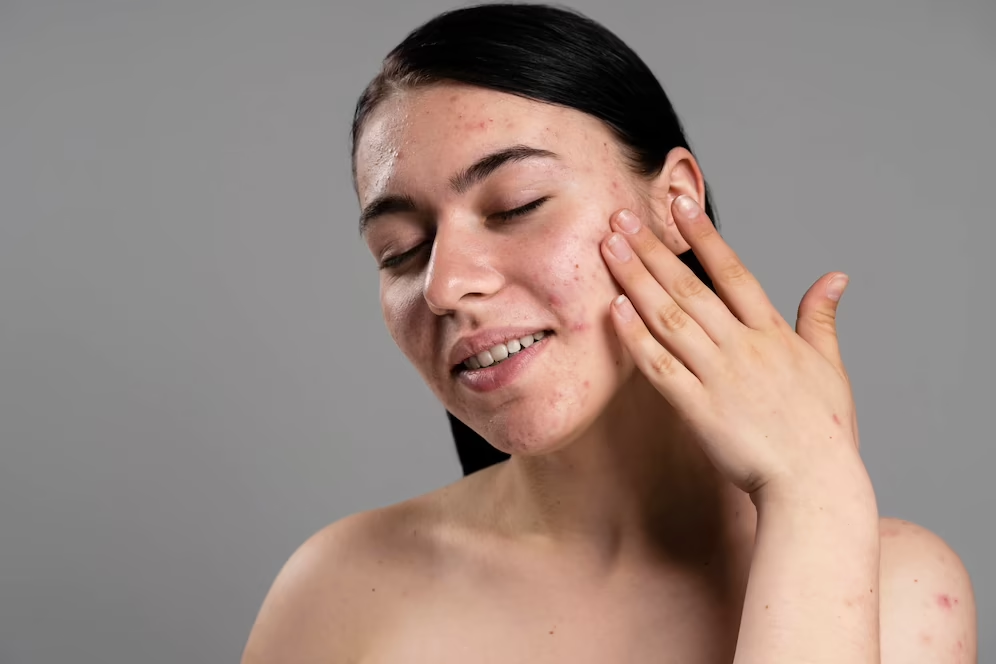
Acne is painful. And the scars that it leaves behind can be even worse. Acne scars are a very common problem, occurring more among teenagers and young adults. The extent of scarring would depend upon the severity of the acne and its recurrence. Individuals who have skin conditions such as acne vulgaris can have severe inflammation and enlarged red bumps on the face, neck, arms and back. Treating acne is extremely important to limit its severity and scarring. But what about the scars? Should one live an underconfident life because of it? Not really. Acne scars can be effectively treated and the scars minimised.
Acne scars are classified into 3 types as
- Icepick scars are scars that appear as pitted or punctured skin surfaces.
- Boxcar scars are characterized by round or oval depressions in the skin.
- Rolling scars lead to an uneven sloping surface of the skin due to scar tissues under the skin.

These scars are characterized as atrophic scars as the skin is unable to return to the normal state after acne healing. However, these scars can be significantly improved or reversed with the help of the right acne scar treatment techniques.
The most common treatments to heal atrophic scars are below.
1. Laser skin treatments
Laser treatments work by heating the outer layer of the skin of the scarred region. The outer skin would peel off and the skin would appear clearer. The treatment also helps in increasing the collagen and elastin production to the treated site and improves healing.
The most common types of laser treatments are:
- Ablative laser resurfacing – In this type a CO2 laser is usually used to remove the top layer of the scarred tissue.
- Non-ablative laser resurfacing – These are predominantly infrared lasers that heat up the skin to increase the production of collagen and elastin
- Fractioned laser treatment – This works on the inner layers of the scar tissue by removing deep pigments. Icepick and boxcar types of scars respond well to it.
There will be slight swelling, pain and redness in the region which will subside in a day or two post the procedure.
2. Microneedling
Microneedling is a technique of pricking the skin with fine needles. This is done to induce the production of collagen which will heal the skin naturally. It suits darker tone skin and can offer great results for small to medium scarring.
3. PRP
PRP or Platelet Rich Plasma therapy is a technique of deriving plasma from the patient’s own blood. This derived plasma is rich in nutrients and vitamins and can promote healing. It provides anti-aging benefits and rejuvenates the skin.
4. Chemical peels
The outer damaged layer of the skin can be removed by using chemical peels. Smooth and less pigmented inner skin will improve the overall appearance.
5. Microdermabrasion
Microdermabrasions involve cleansing the face with an abrasive instrument. It scrubs the outer layer of the skin and the smooth inner layer appears after the treatment.
6. Injectable fillers
The FDA-approved injectable fillers can be used to treat acne scars. Hyaluronic acid is the most common type of filler treatment while there are numerous others. Fillers must be administered periodically to maintain the results.
Frequently asked questions
- Which treatment is best for acne scars?
The correct skin tightening treatment will be decided by the dermatologist based on the extent of scarring and other factors such as skin tone, age, skin elasticity and others. It is important to consult a board-certified doctor to understand what treatment would work.
- Can plastic surgery fix acne scars?
Plastic surgery is a great option to treat acne scars. Apart from the above-mentioned aesthetic treatments, a punch excision is done. It is a minor surgery that improves the skin with skin grafts or stitches.
- Can retinol remove acne scars?
Retinol falls under the category of vitamin A derivatives and has many anti-ageing properties. It can reduce acne and inflammation to a great extent. It is used in combination with Glycolic acid to reduce acne scars.
- Does CO2 laser work for acne scars?
Lasers work by removing the external damaged layer of outer cells. A CO2 laser uses fractional carbon dioxide to reduce acne scarring and other skin irregularities.
- How can I reduce acne scars?
Acne scars can be managed with regular skin care and by following a healthy and active lifestyle. It is important to identify the root cause of acne. A dermatologist could guide on the right measures to be adopted, which includes skincare treatments. Timely and effective medical care would prevent acne from aggravating and leading to excessive scarring.